
Search Arkansas Divorce Records
Arkansas divorce records are official court documents filed with the Circuit Clerk in the county where the case was heard. The state's 75 counties each maintain their own case files, and most are open to the public. Whether you need a certified copy of a Final Decree of Divorce or want to confirm that a divorce took place, this guide covers where to search, what it costs, and how to get what you need. You can find Arkansas divorce records online through the statewide CourtConnect portal, by mail, or in person at your local courthouse.
Arkansas Divorce Records Overview
Where to Find Arkansas Divorce Records
The Circuit Clerk's office is the main place to find divorce records in Arkansas. Each of the state's 75 counties has its own Circuit Clerk who keeps all court case files for domestic relations matters, including divorces. These files hold everything from the original petition through the signed final decree. The clerk's office is part of the Circuit Court system, which is divided into 28 judicial circuits across the state. To get a full case file or a certified copy of the Final Decree of Divorce, contact the Circuit Clerk in the county where the divorce was filed. Most offices are open Monday through Friday, 8:00 AM to 4:30 PM.
The Arkansas Administrative Office of the Courts oversees the state court system and provides contact information for every Circuit Clerk in Arkansas. Their office is at 625 Marshall Street, Suite 1100, Little Rock, AR 72201, phone (501) 682-9400. The AOC also maintains the statewide CourtConnect portal and coordinates the use of standardized court forms across all 75 counties.
The Arkansas Department of Health also plays a role in divorce records. Their Vital Records Section, located at 4815 West Markham Street, Slot 44, Little Rock, AR 72205, maintains a statewide index of divorce certificates going back to January 1923. A certificate from the ADH confirms that a divorce happened and gives you the basic details. It does not include the terms of the settlement, property orders, or custody arrangements. For those specifics, you must contact the Circuit Clerk in the county where the case was filed. Walk-in requests at the Little Rock office made before 4:00 PM are typically handled the same day. Call (501) 661-2336 or toll-free (866) 209-9482 for information.
How to Search Arkansas Divorce Records Online
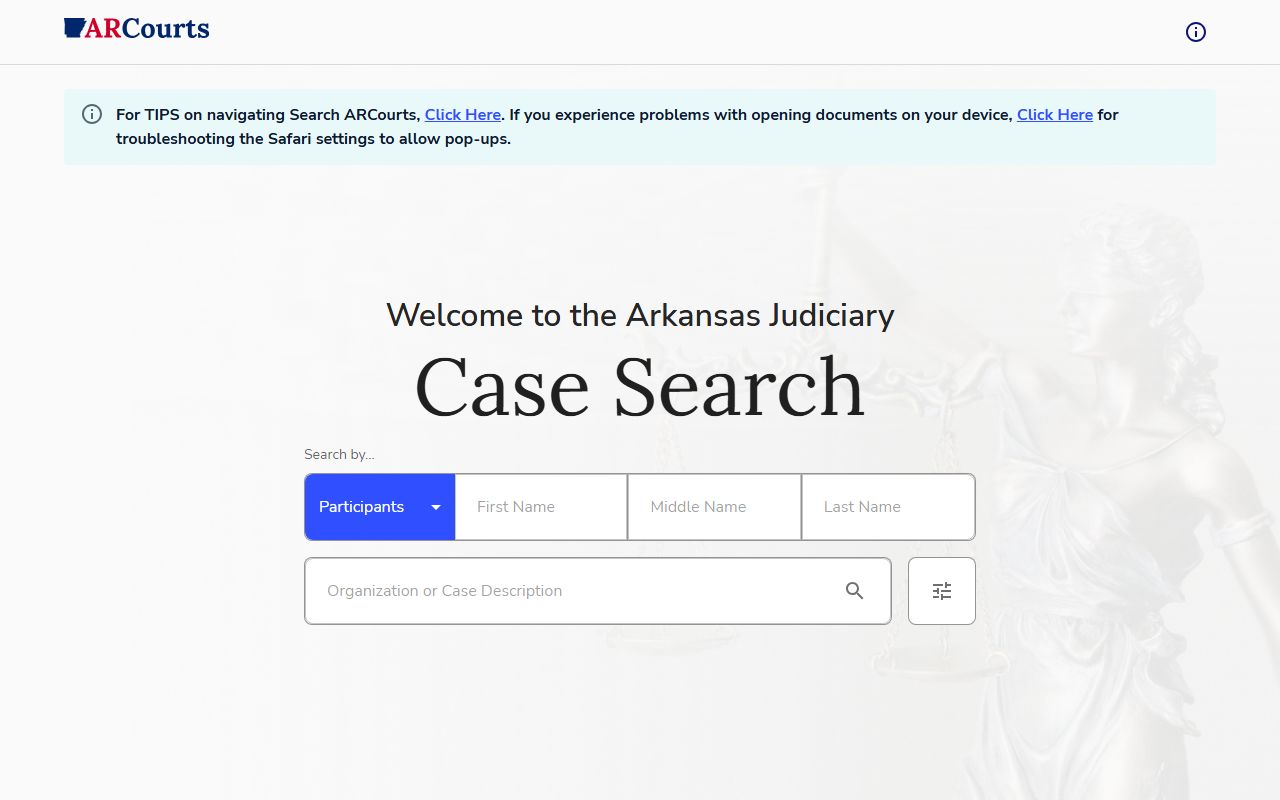
The CourtConnect portal is the official statewide online system for Arkansas court case information. It is free and available around the clock. You can search by party name, date of birth, or case number. To find divorce cases, select "Domestic Relations" as the case type — that is case type 14 in the CourtConnect dropdown. Results show party names, filing date, case status, assigned judge, and docket entries. Most larger counties participate in the system, including Pulaski, Benton, Washington, Faulkner, Saline, and Craighead. Some counties have partial access, which means only a portion of their records appear online.
CourtConnect does not replace a visit to the courthouse when you need certified copies. The system shows case information and some docket entries, but full document images are not available in most counties. For the actual Final Decree of Divorce with the court seal, you must contact the Circuit Clerk directly. Some counties also run their own online portals in addition to CourtConnect. Benton County, for example, offers a searchable database of recorded documents at bentoncircuitclerk.com. Public access terminals are also available at most Circuit Clerk offices so you can search records for free during regular business hours without printing anything.
The Arkansas Judiciary website provides a directory of all courts and links to county-specific online resources. For technical support with CourtConnect, contact the AOC help desk at acap.help@arcourts.gov.
The Arkansas Judiciary CourtConnect portal allows free public access to case information from Circuit and District Courts across the state.
Types of Arkansas Divorce Records
Arkansas produces two distinct types of divorce records, and they come from different agencies. A divorce certificate is a summary document maintained by the Arkansas Department of Health Vital Records Section. It lists the names of both parties, the date of the divorce, and the county where it was granted. Under ACA § 20-18-305, these certificates are restricted. They are not available to the general public. Only the divorced parties, their legal representatives, immediate family members, and others who can show a direct interest in the record may request them. Each copy costs $10, and state law requires keeping that $10 as a search fee even if no record is found.
The divorce decree is a completely different record. It is the full court document that actually ends the marriage, and it comes from the Circuit Clerk's office, not from the ADH. A decree contains everything the judge ordered: how property was divided, whether spousal support was awarded, child custody arrangements, child support obligations, and any other settlement terms. Courts can also issue a certified copy with the official seal, which is accepted by government agencies, banks, and other institutions as legal proof of the divorce. Certified copy fees vary by county but typically run $5 to $10 per document plus a per-page copy charge of $0.25 to $1.00.
A typical Arkansas divorce case file contains the following documents:
- Original Complaint or Petition for Divorce
- Summons and proof of service or waiver
- Answer from the respondent (if filed)
- Financial Affidavit and supporting disclosures
- Child Support Worksheet (for cases with minor children)
- Parenting Plan or Custody Order (where applicable)
- Final Decree of Divorce
Most documents in the file are public records. Social Security numbers and financial account numbers are redacted from filings. Some financial source documents and records related to minor children may have restricted access. A party can ask the court to seal specific records if there is good cause.
Arkansas Divorce Laws and Grounds
The Arkansas Code sets out the statutory grounds and procedures for divorce in Title 9, Chapter 12 of the Arkansas Code Annotated.
Arkansas divorce law is set out in Title 9, Chapter 12 of the Arkansas Code Annotated. Unlike most states, Arkansas does not offer a simple no-fault divorce option. The primary grounds for divorce are fault-based under ACA § 9-12-301. Recognized grounds include felony conviction, cruel treatment that endangers the spouse's life, habitual drunkenness lasting at least one year, adultery, permanent and incurable insanity, and impotence at the time of marriage. General indignities, meaning treatment that makes the spouse's condition intolerable, is also a recognized ground and is the most commonly cited in practice.
The closest equivalent to no-fault divorce in Arkansas is the separation provision. Under ACA § 9-12-306, a court can grant a divorce if both spouses have lived apart continuously for 18 months without cohabitation. Any resumption of marital relations during that period resets the clock. This provision lets couples avoid litigating fault if they can show an 18-month separation through testimony or sworn statements. It requires the same residency qualifications as any other ground.
Residency requirements must be met before a divorce can proceed. At least one spouse must have been a resident of Arkansas for 60 days before the complaint is filed. State law also requires that at least one spouse be a resident for three full months before the final decree can be entered. A 30-day mandatory waiting period applies to all divorces. The court cannot grant the divorce until at least 30 days after the complaint was filed. Arkansas also allows courts to enter temporary orders for custody, support, and property use while the case is pending.
The state divides marital property based on what the court finds just and equitable. Arkansas is an equitable distribution state, not a community property state. Judges have broad authority in deciding how assets and debts are split. Separate property, meaning what each spouse owned before marriage or received as a gift or inheritance, is generally not subject to division.
Fees for Arkansas Divorce Records
Getting a copy of a divorce certificate from the Arkansas Department of Health costs $10 per copy. This fee applies whether you order online, by mail, by phone, or in person. State law requires keeping the $10 as a search fee even if no record is found. Online orders placed through the ADH portal or through VitalChek, the state's authorized third-party vendor, carry additional charges: a $5 standard processing fee per order and a $1.85 non-refundable identity verification fee through LexisNexis. The total for an online order is typically $16.85 plus shipping. Phone orders can be placed toll-free at (866) 209-9482 using Visa, MasterCard, Discover, or American Express. Processing time for mail and online orders is 7 to 14 business days plus shipping.
VitalChek is authorized by the Arkansas Department of Health to process vital records requests, including divorce certificates, with secure online ordering and order tracking.

Getting a certified copy of a divorce decree from the Circuit Clerk costs more. Fees vary county by county. Most offices charge $5 to $10 for the certification plus $0.25 to $1.00 per page for copying. If a case is more than two years old and has been transferred to archive storage, some counties add a retrieval fee. In-person requests are often handled the same day. Mail requests typically take one to two weeks. Call the specific county's Circuit Clerk before visiting to confirm their current fee schedule. Some counties accept payment by cash and check only.
Note: Fee waivers for court costs are available for qualifying low-income individuals. Ask the Circuit Clerk's office about filing an Affidavit of Indigency or Statement of Inability to Pay Court Costs.
How to Get Copies of Divorce Records in Arkansas
There are four ways to request a divorce certificate from the Arkansas Department of Health. Online orders go through the Vital Records Online Service or through VitalChek. Both require you to upload a valid ID and proof of your relationship to the person on the record. You can also call (866) 209-9482 to place a phone order by credit card. Mail requests go to: Arkansas Department of Health, Vital Records, Slot 44, 4815 West Markham Street, Little Rock, AR 72205. Include a completed Divorce Coupon Application, a copy of your photo ID, and a check or money order payable to the Arkansas Department of Health. In-person visits to the Little Rock office offer the fastest service. Requests made before 4:00 PM are usually completed that day.
Under ACA § 20-18-305, access to divorce certificates is restricted. Eligible requesters include the divorced parties, their spouses or domestic partners, descendants, parents or legal guardians, designated attorneys, federal and state government agents, and genealogists who meet certain conditions. If you don't qualify for a certificate from the ADH, you can still request the full divorce decree from the Circuit Clerk. Decree requests are not subject to the same access restrictions as vital records certificates.
For the actual divorce decree from a Circuit Clerk, visit the courthouse in the county where the case was filed. Bring a valid photo ID. Give the clerk the full names of both parties and the approximate date of the divorce, or the case number if you have it. The clerk can pull the file and make copies. Certified copies carry the court seal and are required for legal purposes like name changes and remarriage. Plain copies cost less but are not certified.
Apostille authentication is available for Arkansas divorce decrees that need to be used in other countries. First obtain a certified copy from the Circuit Clerk, then submit it to the Arkansas Secretary of State at State Capitol, Suite 256, Little Rock, AR 72201, phone (501) 682-3409. The authentication fee is $10 per document.
Legal Help for Divorce in Arkansas
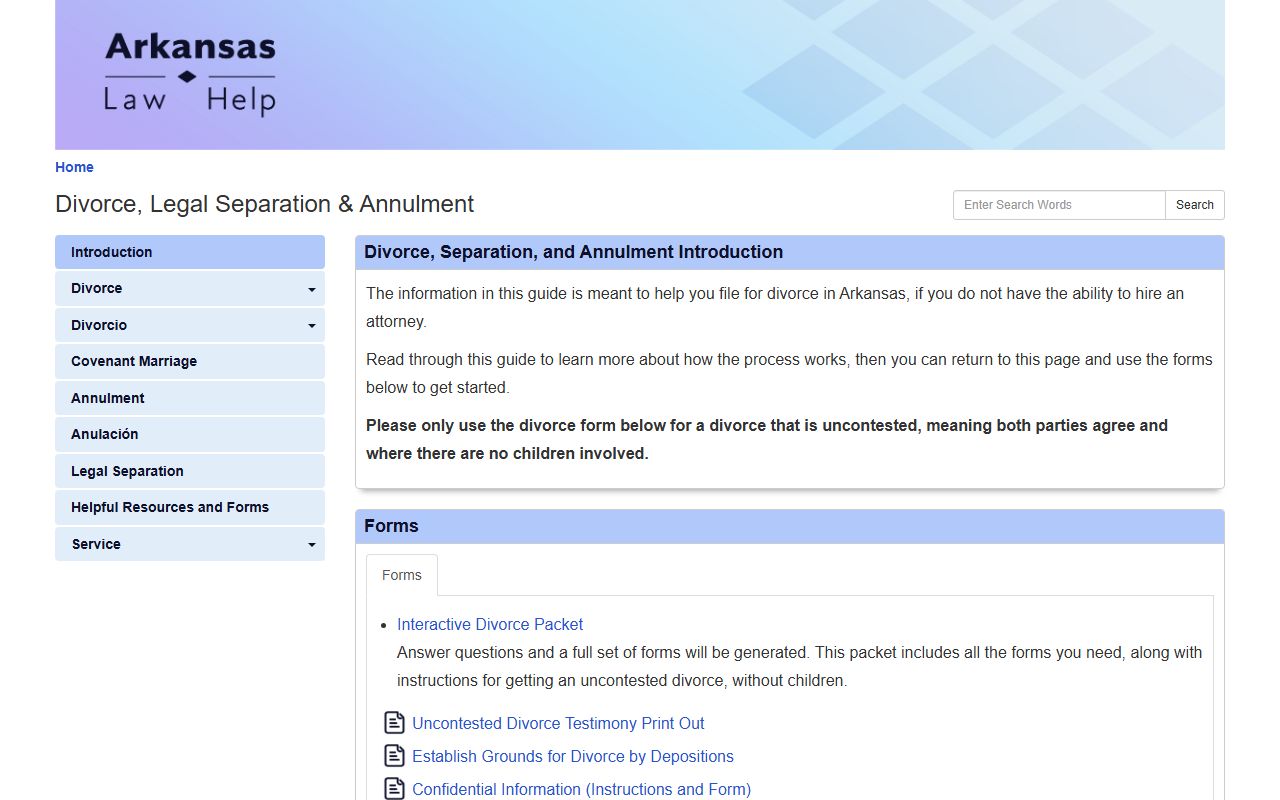
The Arkansas Legal Services Partnership offers free interactive form preparation tools and self-help resources for individuals navigating divorce proceedings without an attorney.
Several organizations provide free or low-cost legal help for divorce in Arkansas. Legal Aid of Arkansas serves qualifying low-income individuals with offices in Springdale, Jonesboro, and Pine Bluff. The Center for Arkansas Legal Services at 1300 West 6th Street, Little Rock, AR 72201 can be reached at (501) 376-3423 and handles cases in central Arkansas. Both organizations help with divorce proceedings, custody matters, and domestic violence protective orders. The Arkansas Legal Services Partnership also offers resources for contempt motions when a former spouse fails to comply with court orders on child support, alimony, or property division.
The Arkansas Bar Association runs a lawyer referral service at (501) 375-4606 for those who need private counsel. The Bar Association is located at 400 West Capitol Avenue, Suite 1100, Little Rock, AR 72201. Many courthouses have self-help desks where staff can direct you to the right forms, though they cannot give legal advice. The Arkansas Judiciary website provides standardized domestic relations forms approved for all Arkansas Circuit Courts, including the Complaint for Divorce, Domestic Relations Cover Sheet, Verification, and Entry of Appearance and Waiver of Service for uncontested cases.
The Arkansas Bar Association maintains a searchable directory of attorneys and a lawyer referral service for residents who need family law representation.

Historical Arkansas Divorce Records
For divorces that happened before January 1923, the Arkansas Department of Health does not have records. Those older cases are maintained at the county level by the Circuit Clerk where the divorce was granted. Many Arkansas counties have court records going back to the 1800s. Some early records have been digitized or microfilmed by genealogical organizations. The Arkansas State Archives, located at One Capitol Mall, Little Rock, AR 72201, holds collections from all 75 counties, including some early court records and indexes. Their collections include county court records, deed books, marriage records, probate records, and tax records that may contain information relevant to early divorce research.
Online genealogical resources can also help. FamilySearch maintains an Arkansas Divorce Index covering 1923 to 1939, and a broader Arkansas Divorces collection covering 1923 to 1969 is available through Ancestry.com as a subscription resource. Craighead County is notable for having published historical divorce records going back to 1878. The Genealogical Society of Craighead County sells publications covering early divorces from the Jonesboro Courthouse (1878-1897) and the Lake City Courthouse (1884-1950). For counties with courthouse fires that destroyed early records, Polk County (1883 fire) and Benton County (1865 fire) are the most significant examples, though partial records may still exist through other sources.
Are Arkansas Divorce Records Public?
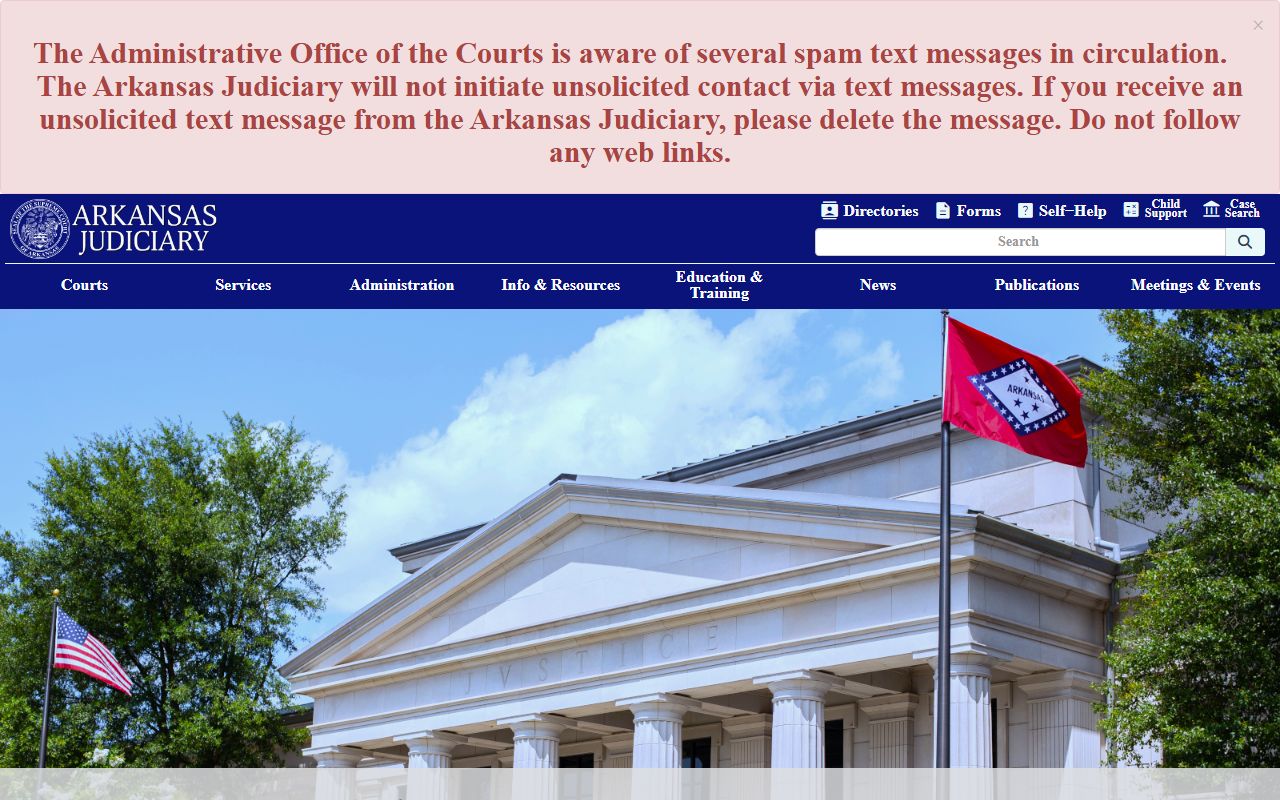
The Arkansas Administrative Office of the Courts sets statewide policies for court record access under Arkansas Supreme Court Administrative Order No. 19.
Most Arkansas divorce court records are public. The Arkansas Freedom of Information Act under ACA § 25-19-105 establishes that public records shall be open to inspection and copying. Court divorce case files generally fall under this law. That means anyone can ask to view a file at the Circuit Clerk's office. You do not have to be a party to the case. You don't have to give a reason. The clerk will pull the file during regular business hours.
Some parts of divorce files have limited access. Social Security numbers and financial account numbers are redacted. Detailed financial source documents may be sealed in certain cases. Records involving minor children, particularly custody evaluations and guardian ad litem reports, can have restricted access. Courts can seal additional materials if there is good cause shown. Arkansas Supreme Court Administrative Order No. 19 governs overall court record access and sets out the procedures for requesting sealed records. Once a divorce record is 100 years old, the ADH divorce certificate becomes fully available to the public regardless of the requester's relationship to the parties.
Note: Juvenile court records, including cases under ACA § 9-27-309, are confidential and not available as public records regardless of whether a divorce case is connected to the juvenile matter.
Browse Divorce Records by Arkansas County
Arkansas has 75 counties, each with its own Circuit Clerk who maintains divorce case files. Select a county below to find contact information, local procedures, and resources for divorce records in that area.
Divorce Records in Major Arkansas Cities
Residents of Arkansas cities file for divorce at the Circuit Court in their county. Pick a city below to find where to go for divorce records in that area, along with courthouse info and local resources.